Four decisions we couldn't have made before.
Each one is a real choice the data surfaced. Most of them counter-intuitive.
1. Killed the Instagram DM funnel entirely.
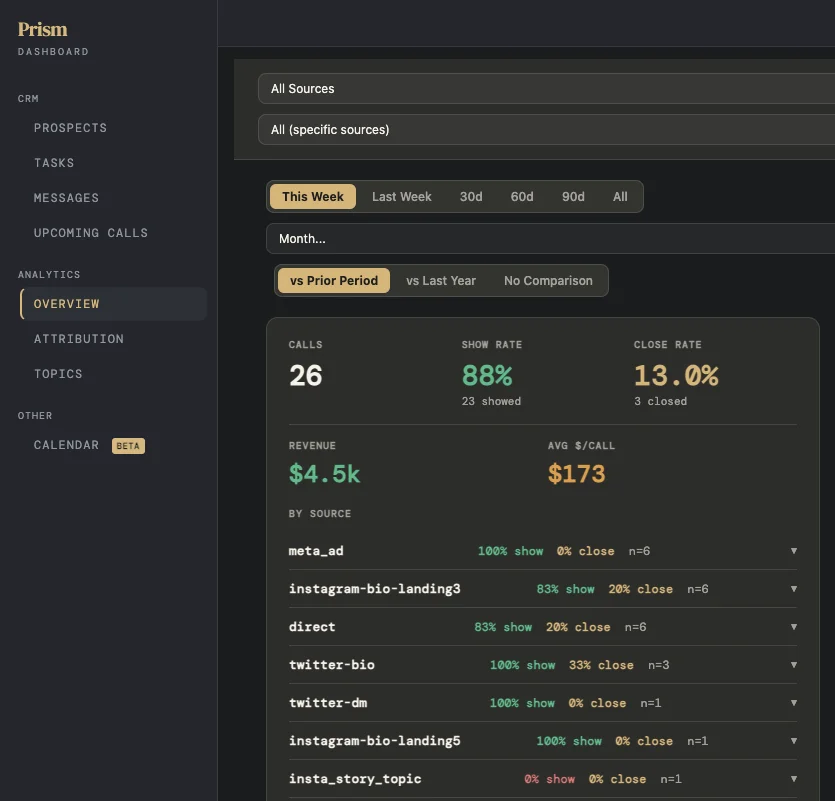
Instagram DMs, the classic "comment PRISM and I'll send you a link" play, were showing a 36% show rate and 7% close rate. Meanwhile, the same audience going through the bio link was showing 57% and up.
The DM funnel felt like it was working because bookings were happening. The data said it was the worst channel we had. We turned it off.
2. Discovered landing pages don't always help.
On Instagram, adding a dedicated landing page above the calendar pushed close rate from 6% to 15% and expected value to $92 per booking. Huge win.
So we tried the same thing on Twitter, where traffic was already going straight to the calendar and closing well. Volume dropped, quality stayed the same. We removed the landing page and went back to the bare calendar.
Landing pages are not a universal upgrade. What matters is matching the funnel to the audience, and you can't do that without measuring both.
3. Found the surprise signals in the data.
The AI scoring model surfaced something we would never have looked for: iCloud email addresses convert at meaningfully higher rates. Once you see it, it makes sense. But nobody sits down and thinks "let me check email domain as a lead quality signal." The system just noticed.
Same for content strategy. Analyzing the topics leads mentioned in intake forms revealed that weight loss, blood pressure, and hormones had the highest expected value. That's not what we would have guessed. The content calendar is now built around those three topics.
4. Turned ads from guesswork into a data problem.
You can't run Meta or Google ads without proper attribution. Without it, you're guessing at ROI, and you have no idea which ad is actually working.
The default Instagram play is to retarget people who engaged with your account. We didn't do that. Instead we uploaded our real client list (every person who had closed) and used it to seed a 1% lookalike audience. Then a second layer on top: everyone who had shown up to a call and been rated highly by the sales lead, another 1% lookalike tuned tighter.
Show rate on the most recent round hit 79%. Historically, ads pulled 40 to 45%. That's low enough that scaling spend just meant more bad leads clogging the calendar, which is why we hadn't. Feeding the algorithm real quality data changed that.